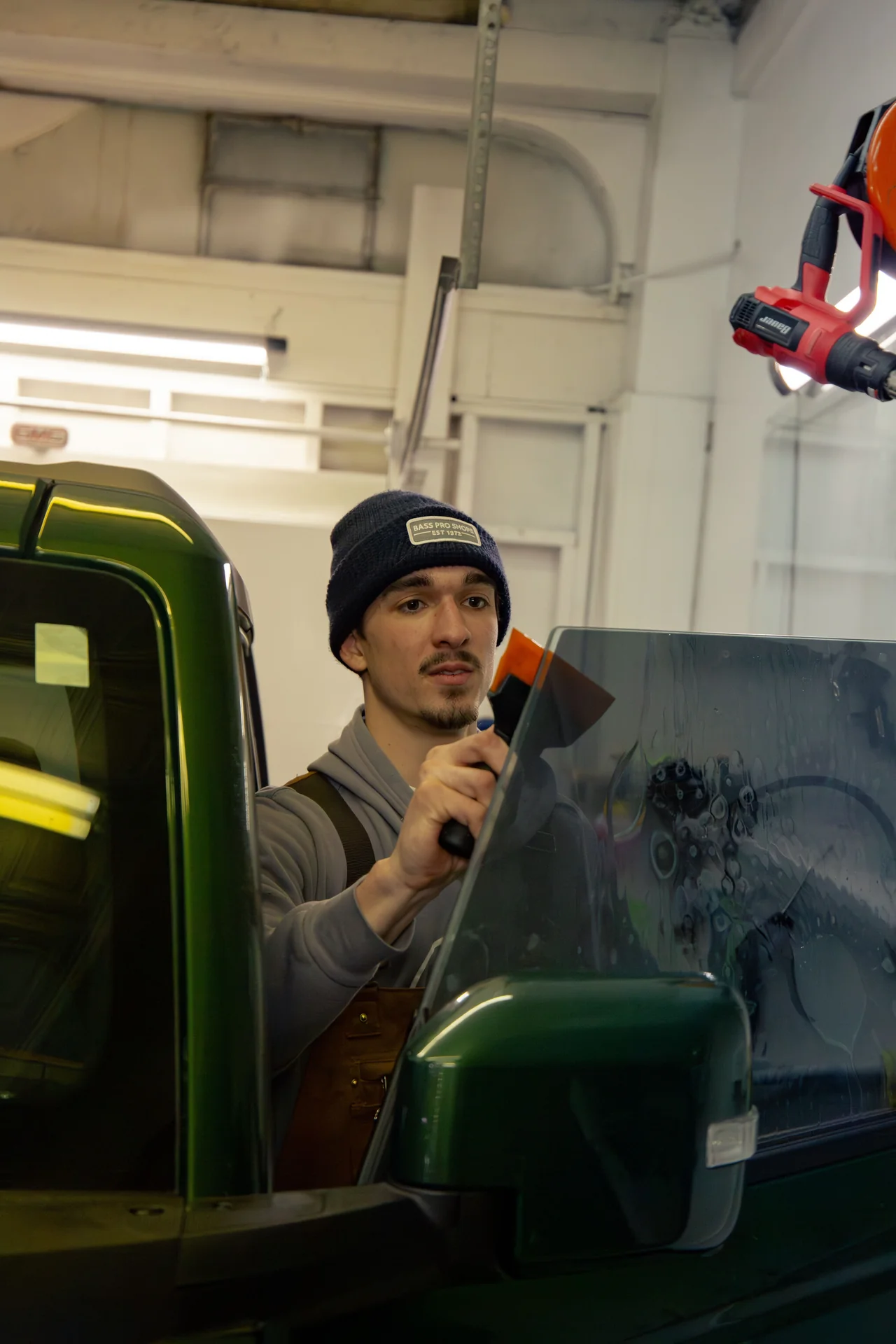
What is ceramic window tint?
Ceramic tint is window film made with non-conductive nano-ceramic particles that absorb and reflect infrared heat while staying clear enough to see through easily.
Dyed film mostly darkens the glass. Ceramic particles go after infrared light, the part of sunlight you feel as heat, so ceramic film can keep a cabin cooler without blacking out the windows.
- No signal problems. Ceramic film has no metal in it, so it won't interfere with your phone, GPS or radio.
- Neutral color that lasts. It keeps a clean, neutral look and doesn't fade purple the way cheap dyed film can.
- Clear for its darkness. You can choose a lighter shade and still cut heat, which helps on windows where Ohio limits how dark you can go.
We install dyed and ceramic window tint on cars, trucks and fleet vehicles. See all our services.
Ceramic vs carbon vs dyed tint: what's the difference?
Dyed tint mainly darkens glass, carbon adds moderate heat rejection, and ceramic rejects the most infrared heat of the three without needing to be darker.
| Dyed tint | Carbon tint | Ceramic tint | |
|---|---|---|---|
| What it's made of | Dyed film layer | Carbon particles | Nano-ceramic particles |
| Heat rejection | Low | Medium | Highest of the three |
| Fade resistance | Can fade or turn purple over time | Varies by film | Holds color well |
| Signal interference | None | None | None |
| Typical cost | Lowest | Middle | Highest |
| At TintLab 419 | ✔ Offered | Call to ask | ✔ Offered |
Ceramic vs carbon tint
Carbon and ceramic are both non-metallic, so neither one blocks phone or GPS signals. Carbon film uses carbon particles for a dark, matte look and moderate heat rejection. Ceramic film rejects more infrared heat at the same shade and usually costs more. If heat is your main complaint, ceramic is the stronger choice. If you mostly want a dark, matte look for less money, carbon can make sense.
Ceramic vs dyed (regular) tint
Dyed tint is the budget option: it darkens the glass for privacy and looks, but does less against heat and can fade. Ceramic costs more, holds its color, and cuts more heat without going darker, which matters on the front windows, where Ohio caps the shade.
How much heat does ceramic tint block?
Heat rejection depends on the specific film and shade, not on the word "ceramic". Compare the manufacturer's total solar energy rejected (TSER) and infrared rejection (IRR) numbers.
Darkness and heat rejection are different measurements. Visible light transmission (VLT) is the shade, the percentage of visible light that gets through the glass. It tells you how dark the window looks, not how much heat it stops. A lighter ceramic film can beat a darker dyed film on heat, because it's blocking infrared light you can't see.
So look past the shade number: ask for the spec sheet on the exact film and shade you're considering, and compare TSER and IRR side by side.
What that means in Toledo. A car parked in the summer sun heats up fast, mostly through the glass. In winter, low sun and glare off snow are the bigger annoyance. Ceramic film helps with heat in July and glare year-round without making the glass harder to see through.
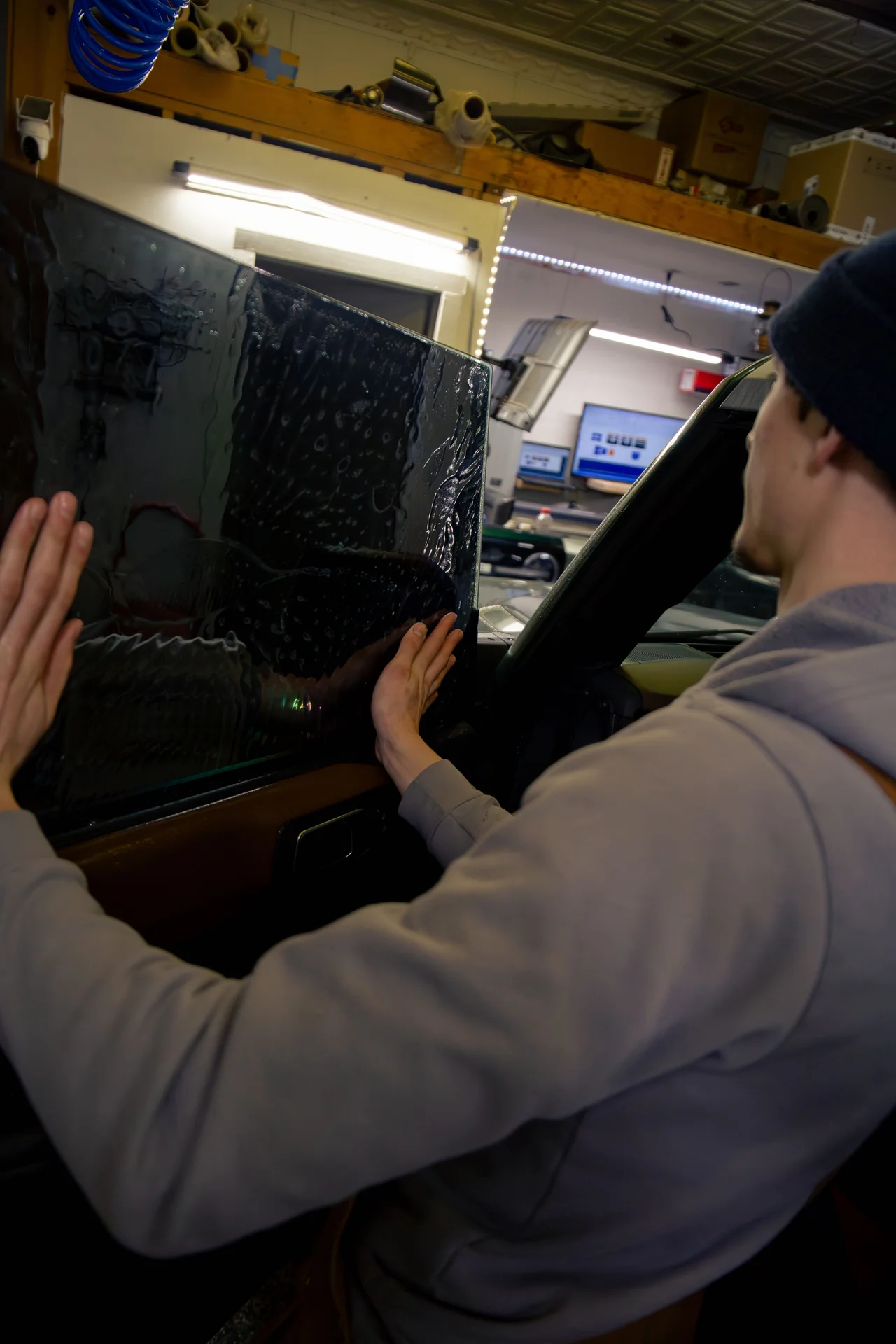
Is ceramic tint worth it?
Usually yes if you want a cooler cabin, less glare and strong UV protection while staying legal on the front windows. If you only want privacy on the back glass, dyed film may be enough.
Ceramic is usually worth it if you:
- park outside or commute in the sun and want a cooler cabin;
- want heat control on the front windows without going darker than Ohio allows;
- plan to keep the vehicle and want film that holds its color.
The downsides of ceramic tint
The honest downside is price: ceramic costs more than dyed or carbon film. Quality also varies by brand and by installer. Before you book anywhere, ask which film line you're getting and what the warranty covers.
How much does ceramic tint cost in Toledo?
Price depends on your vehicle and film line. Call (419) 376-7087 for an exact quote.
A two-door coupe and a full-size SUV are very different jobs, so there isn't one honest price for everyone. These are the things that move the number:
- How many windows. The two front windows only, or the whole vehicle.
- Vehicle size and glass shape. Bigger and more curved glass takes more film and more time.
- Film line and shade. Higher-performance ceramic lines cost more.
- Removing old tint. Peeling or bubbled film has to come off before new film goes on.
Call with your year, make and model and the windows you want tinted, and we'll give you an exact number.
Get your ceramic tint price in one call.
Ohio-legal ceramic tint shades
In Ohio, front side windows must let in at least 50% of light (±3% tolerance); rear side and back windows can be any darkness; the windshield needs 70% unless the tint is above the AS-1 line or the top 5 inches.
- Windshield: at least 70% (±3%), not red or yellow. A top strip is fine if it stays above the AS-1 line or within the top 5 inches.
- Front side windows: at least 50% (±3%), not red or yellow.
- Rear side windows: any darkness.
- Back window: any darkness, but darker than 50% requires outside mirrors on both sides.
- No reflectorized (mirror-like) film on any window.
- Label required: the film must carry the maker's label.
These rules come from Ohio Administrative Code 4501-41-03 and Ohio Revised Code 4513.241. Ohio measures the film and the glass together, so a film sold as "50%" can read a little darker once it's on your window. Our full Ohio window tint law guide covers the details, exemptions and how tint is measured.
Picking a shade
On the front side windows, the 50% limit rules out darker shades like 35% or 20%. Behind the driver, anything goes, from a light 50% to a 5% limo shade, as long as you have both outside mirrors. Because ceramic doesn't need to be dark to cut heat, a light ceramic shade on the fronts lets you stay legal and still get heat control.
Drive a lot at night? Keep the fronts lighter and let the rear windows carry the privacy.
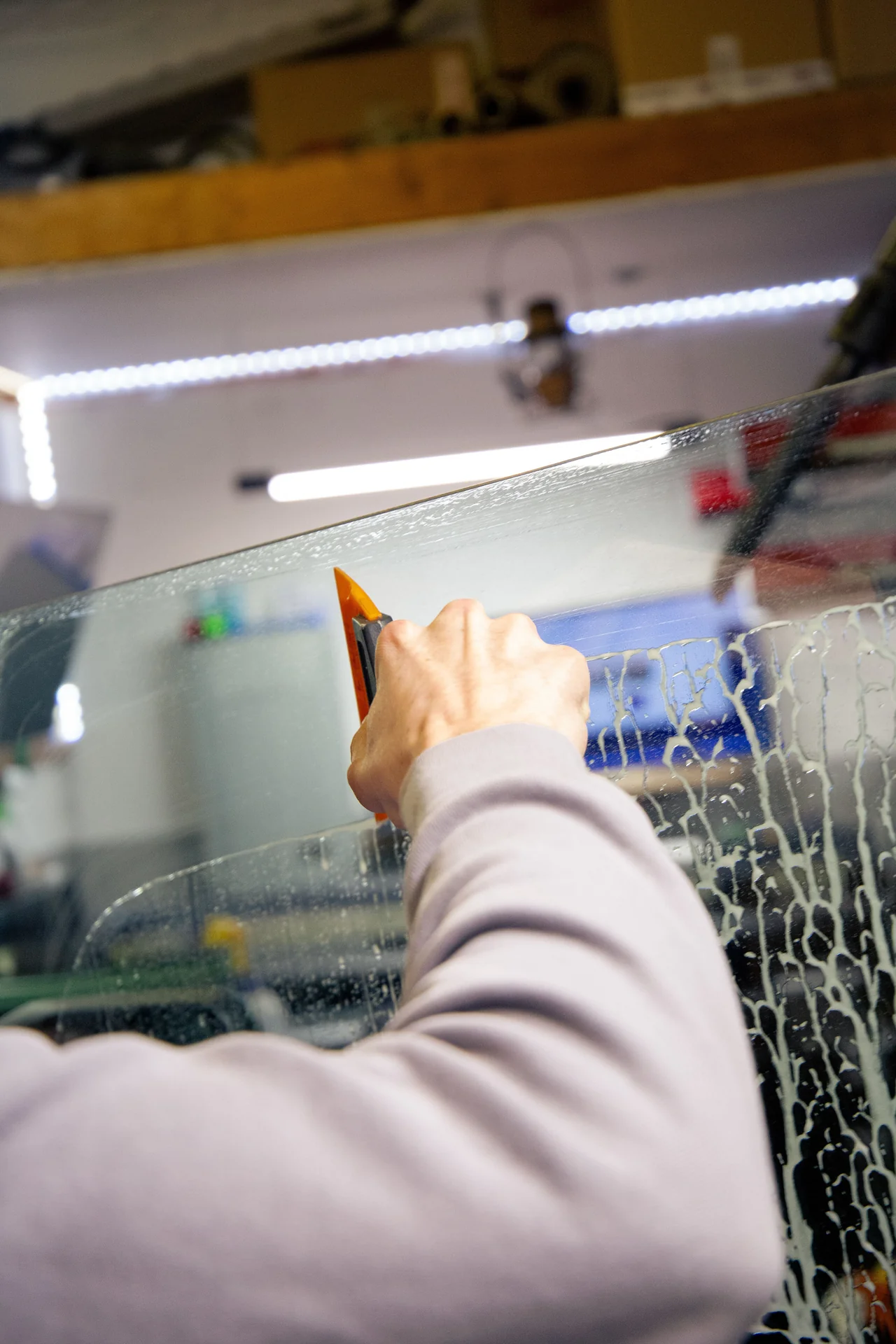
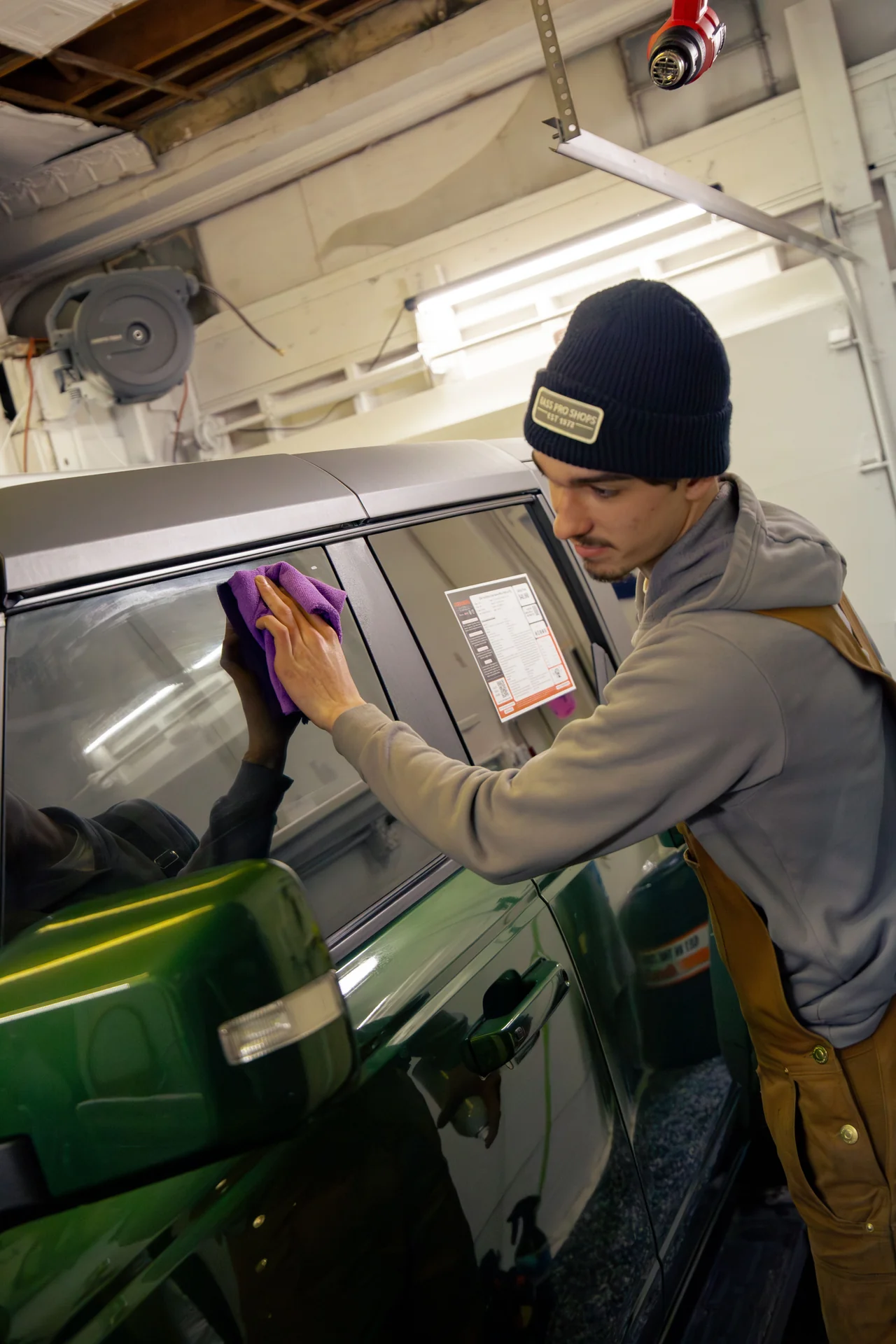
Our ceramic tint install process
Five steps, from picking a shade to caring for the film after you drive away.
- Consult and choose a shadeWe look at your vehicle and talk through heat, privacy, night driving and Ohio's limits, then pick a shade for each window.
- Clean the glassEach window is cleaned so no dust or debris gets trapped under the film.
- Cut and heat-shrink the filmThe film is cut to each window and heat-shrunk so it lies flat on curved glass, like a rear window.
- InstallThe film goes on the inside of the glass and is squeegeed out for a smooth, clean finish.
- Cure guidanceNew film needs time to cure. Before you leave, we'll tell you when it's safe to roll the windows down and how to clean them.
Ceramic tint near Toledo: Sylvania, Perrysburg, Oregon and Maumee
TintLab 419 is an owner-operated window tint shop at 2121 W Sylvania Ave in Toledo, OH. Hours: Mon-Fri 9am-7pm | Sat-Sun 9am-5:30pm.
We install ceramic window tint for drivers across Toledo and nearby Sylvania, Perrysburg, Oregon and Maumee.
Ceramic window tint FAQs
Is ceramic tint better than regular tint?
Ceramic tint rejects more infrared heat than regular dyed tint, holds its color longer, and doesn't need to be as dark to keep a car cool. Dyed tint costs less and is mainly for privacy and looks.
What's the difference between ceramic and carbon tint?
Both are non-metallic and won't block phone or GPS signals. Carbon film gives moderate heat rejection with a matte look; ceramic film uses nano-ceramic particles to reject more infrared heat and usually costs more.
Can you see at night with ceramic tint?
Yes, as long as you choose a sensible shade. Ceramic film is very clear for its darkness, and Ohio already requires front side windows to let in at least 50% of light, which keeps night visibility good.
What are the downsides of ceramic tint?
The main downside is price: ceramic costs more than dyed or carbon film. Quality also varies by brand and installer, so ask which film line you're getting and what the warranty covers.
Is ceramic tint legal in Ohio?
Yes. Ohio regulates how dark the tint is, not the film type. Front side windows must allow at least 50% light (±3%), rear windows can be any darkness, and reflective films aren't allowed. See our Ohio window tint law guide.
How much does ceramic tint cost in Toledo?
Price depends on your vehicle, how many windows you tint and the film line. Call TintLab 419 at (419) 376-7087 for an exact quote.
How long does ceramic tint last?
Quality ceramic film is built to last for many years without fading or turning purple. Ask us about warranty coverage on the film we install.